

- 报告题目:Distributed Actuation and Control with Photodeformation Mechanism
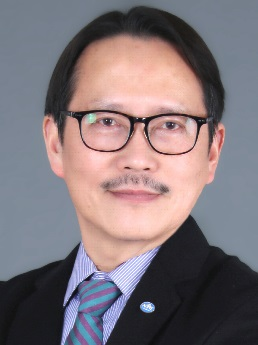
- 报 告 人:邹鸿生 教授
- 报告时间:2026年1月16日(星期五)9:30-10:30
- 报告地点:祁连堂322报告厅
- 主 持 人:王记增 教授
- 报告人简介
邹鸿生教授,英国皇家学会工艺院(RSA)院士,美国机械工程师学会(ASME) Fellow,美国University of Kentucky机械系、南京航空航天大学荣誉教授,航空航天交叉研究院院长,美国普渡大学(Purdue University)机械工程博士等。是国际智能结构与结构电子系统领域的创始人之一,提出智能结构及结构电子(StrucTronics)系统概念,建立压电、挠电、光电、电致、磁致、光控形状记忆等智能板壳结构传感/控制/能量采集理论,应用于航空、航天、汽车、医疗、能源、机械等元件及系统设计,解决实际工程问题。发表学术论文/章节近600篇,出版学术专著10部,其中《Piezoelectric Shells (Sensing, Energy Harvesting and Distributed Control)》已成为领域内权威著作。曾任ASME Board on Technical Knowledge Dissemination理事会长,Interdisciplinary Councils Committee主席、ASME国际设计技术及工程计算大会(IDETC/CIE2007)总主席、21届振动及噪声大会主席、Mechanical Systems and Signal Processing创刊编委等。现任ASME结构与系统动力及控制技术委员会(DCSS)终身会员、《国际航空航天科学》主编、ICAST IOC委员等。获得六次最佳论文奖,六次ASME杰出领导及服务奖,叁次 NASA新技术发明奖并取得多项专利,荣获2007、2021中国工程院外籍院士提名,入选ScholarGPS全球顶尖0.05%学者(其中Vibration Control全球第六、Piezoelectricity全球第十),Sandford/Elsvier全球2%顶尖科学家等。
- 报告摘要
Light-driven smart materials offer non-contact wireless actuation and control immunized from acoustic, electrical and magnetic disturbances. This report introduces two photdeformation based actuations, i.e., a light-actuated shape memory polymer (LaSMP) and a hybrid photovoltaic/flexoelectric mechanism. Under ultraviolet (UV) light illuminations, LaSMP Young's modulus changes and the shape can be restored when UV removed. The LaSMP’s dynamic stiffness and shape memory characteristics can be applied to the vibration control of structures. Vibration controls of beam/ring/shell structures with the phase-shift and neural-network algorithms are studied and their control effectiveness evaluated. Next, a novel hybrid photovoltaic/flexoelectric actuation mechanism combines a photovoltaic generator and a flexoelectric actuator. Spatial-time distributions of the photo-flexoelectric induced control moments are calculated. Static deflection control and dynamic vibration control of cantilever beams are investigated, and independent modal control effects are evaluated. Control effects by the Lyapunov control are better than those via the proportional feedback and velocity feedback controls. The customization of modal control forces can be realized via a non-contact strategy by adjusting the light intensity and pre-illumination time. Design issues related to the optimal position of AFM probe and actuator size are also addressed.